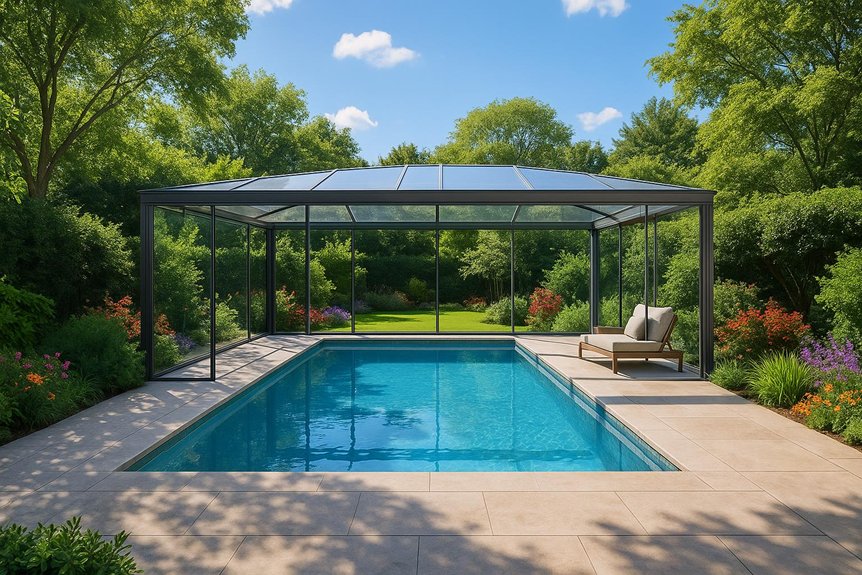
If you’re considering an enclosure for your swimming pool, you’re making a smart investment. These enclosures enhance safety, privacy, and provide year-round enjoyment while reducing maintenance time and costs. You’ll find various types, including screened and glass options, to fit your style and budget. Factors like local climate and installation costs matter too. With the right information, you can choose the perfect enclosure that meets your needs and complements your outdoor space. There’s more to explore!
Why Install an Enclosure for Your Swimming Pool?
Installing an enclosure for your swimming pool lets you enjoy year-round swimming while keeping the water clean and protected from the elements.
It also enhances your privacy and safety, giving you peace of mind as your family enjoys the pool.
With these benefits, an enclosure can transform your backyard into a more inviting space.
Year-Round Swimming Enjoyment
If you want to enjoy your pool year-round, a well-designed enclosure can make all the difference. With proper pool enclosure installation, you can create a controlled environment that protects against harsh weather conditions. This means you can swim comfortably, no matter the season.
One of the key benefits of a pool enclosure is its ability to keep debris out, markedly reducing cleaning time and maintenance efforts. Plus, enclosures help maintain water temperature, lowering heating costs and extending your swimming season by several months.
You’ll also enjoy reduced water evaporation, conserving resources and keeping water levels stable. Ultimately, a pool enclosure transforms your outdoor space into a year-round retreat for relaxation and fun.
Protection from Weather and Debris
When you invest in a pool enclosure, you not only enhance your swimming experience but also protect your pool from the elements.
A well-designed enclosure offers essential protection from weather conditions like rain, snow, and harsh sunlight, ensuring you can enjoy your pool year-round.
By reducing debris accumulation, you’ll cut down maintenance time and costs by as much as 50%. Enclosures act as a barrier against leaves, pollen, and other debris, helping maintain water clarity and reducing the need for chemical treatments.
Additionally, they minimize water evaporation, saving you on refill costs during hot months.
Ultimately, a pool enclosure can enhance the longevity of your pool and its components by shielding them from environmental wear and tear.
Enhanced Privacy and Safety
A pool enclosure doesn’t just protect against weather and debris; it also enhances your privacy and safety.
With a secure enclosure, you can enjoy your pool area without worrying about unwanted guests, whether it’s neighbors peeking in or wildlife wandering through. Lockable systems provide an extra layer of security, keeping children and pets safe from accidental falls into the water.
Additionally, a screen enclosure helps keep pesky insects at bay, allowing you to relax comfortably outdoors. This enhanced privacy not only boosts your enjoyment but can also increase your property value, making your home more appealing to prospective buyers.
Investing in an enclosure truly elevates your swimming experience while prioritizing safety and seclusion.
Types of Enclosures for Swimming Pools
When choosing an enclosure for your swimming pool, you’ve got several options to evaluate.
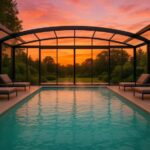
Screened enclosures let in breezes while keeping out pests, while glass or polycarbonate structures provide clear views and protection from the elements.
If you prefer flexibility, retractable systems allow you to open up or close off your pool area as needed.
Screened Enclosures
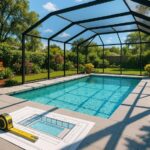
Screened enclosures come in three primary types: low, medium-height, and high, each designed to cater to different needs and preferences.
Low enclosures primarily offer basic coverage, protecting your existing pool from debris.
Medium-height enclosures let you swim underneath while balancing visibility and functionality.
If you want ample space for social activities, high enclosures provide that and more, with nearly ten models available to suit diverse requirements.
You can also choose from standard screened options, which keep out insects and animals, or ExtremeView models, which eliminate vertical posts for unobstructed views.
For a personalized touch, consider custom enclosures tailored to your pool’s shape and your backyard layout during the installation process.
Glass or Polycarbonate Structures
Exploring your options for swimming pool enclosures leads you to two popular materials: glass and polycarbonate.
Glass pool enclosures offer an elegant finish and excellent light diffusion, creating a beautiful environment. However, they can be fragile and more expensive, requiring careful handling during pool maintenance.
On the other hand, polycarbonate structures are highly durable, providing thermal insulation and UV protection, making them a cost-effective choice. They’re lighter and resistant to impacts, ensuring children and pets stay safe.
With options for fixed or retractable designs, polycarbonate allows flexibility in usage. Both materials can last for decades with proper care, so choosing the right pool enclosure depends on your preferences and needs.
Retractable Enclosure Systems
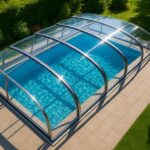
Retractable enclosure systems offer a versatile solution for swimming pool owners, allowing you to easily adapt your pool area to changing weather conditions.
These systems come in various styles, from low to high models, catering to your needs for basic coverage or social gatherings. With lightweight aluminum frames, they’re durable and resistant to corrosion, ensuring a quality pool experience.
Proper installation is essential, as it guarantees that your enclosure withstands environmental factors while enhancing the aesthetic appeal of your space.
Advanced features like retractable roofs and sliding panels provide seamless shifts between indoor and outdoor settings, helping you keep your pool accessible year-round.
Choose a retractable enclosure system to create your perfect swimming pool environment!
Factors to Consider Before Buying
Before you buy a swimming pool enclosure, think about your local climate and weather patterns, as they can impact the materials you choose.
Also, keep your budget in mind along with the long-term value of the enclosure.
Finally, check local building codes and permit requirements to guarantee your installation goes smoothly.
Climate and Regional Weather Patterns
When choosing a pool enclosure, understanding your local climate is essential, as it directly impacts the materials and design you’ll need.
In areas with high humidity, opt for corrosion-resistant materials like aluminum.
Consider regional weather patterns; if you experience heavy rainfall or strong winds, guarantee your enclosure’s design can withstand these conditions, focusing on its durability ratings.
For colder climates, a well-insulated enclosure is key to maintaining pool temperatures and extending your swimming season, making polycarbonate roofs a great choice.
If storms are common, reinforced structures are a must to protect against high winds and debris.
Budget and Long-Term Value
Investing in a pool enclosure can enhance your property’s value and provide long-term benefits, so it’s essential to weigh your budget against future savings.
Consider that a well-chosen enclosure can increase the value of your home by up to 7%, making it a smart long-term investment.
When evaluating your budget, factor in maintenance costs; aluminum frames typically require less upkeep than wooden options, which may need regular treatment.
While high-quality materials like polycarbonate might’ve a higher upfront cost, they offer durability and energy efficiency.
Don’t forget to account for installation costs, as professional help can save you money on future repairs.
A good enclosure also cuts down on cleaning efforts and chemical usage, leading to ongoing savings.
Local Building Codes and Permit Requirements
Understanding the financial implications of a pool enclosure is just the start; local building codes and permit requirements are equally important.
Before you buy, check your area’s local building codes, which often dictate specific design, height, and safety standards for your swimming pool enclosure. Many homeowners’ associations (HOAs) require permits, so consult them to avoid fines or complications.
Obtaining the necessary permits involves submitting detailed plans, which can influence your design and material choices. Additionally, be aware of local zoning laws that may impose setback requirements, determining how far your enclosure must be from property lines.
Ignoring these regulations can lead to costly penalties, delays, or even the removal of an improperly installed enclosure. Stay informed to guarantee a smooth installation process.
Cost of a Swimming Pool Enclosure
When you’re considering a swimming pool enclosure, it’s essential to understand the average price ranges for different types.
Costs can vary widely, typically falling between $5,000 and $20,000, depending on the materials and design you choose.
Don’t forget to factor in additional installation costs, as these can greatly impact your overall budget.
Average Price Ranges by Type
Swimming pool enclosures come with a wide range of prices that cater to different budgets and needs. The average price ranges for a standard screen pool enclosure fall between $5,000 and $15,000, depending on size and design.
Medium-height enclosures, which allow swimming while closed, typically cost between $15,000 and $25,000. If you’re looking for high enclosures that provide ample space for activities underneath, expect to spend between $25,000 and $50,000 or more, influenced by customization options.
For unique shapes or landscaping, custom enclosures can vary greatly in price and often require a detailed quote. Whatever you choose, it’s essential to assess your pool deck and overall requirements before making a decision.
Additional Costs to Expect
While planning your swimming pool enclosure budget, it’s essential to factor in additional costs that can greatly impact the overall price.
The average cost of a swimming pool enclosure can range from $5,000 to $15,000, but don’t forget that installation costs usually account for 30-50% of this total.
You might face additional expenses, like permits and inspections, which can add $200 to $1,000 based on local regulations.
If you opt for high-quality screens, such as Phifer Screens, expect an increase in costs, too.
Finally, consider maintenance costs, as regular inspections and repairs can average around $200 to $500 annually to keep your enclosure in top shape.
Installation Process
When you’re ready to install your swimming pool enclosure, hiring the right installer is essential for a smooth process.
You’ll go through steps from design approval to the final touches, ensuring everything meets your expectations.
With the right team, you can enjoy your new enclosure in no time.
Hiring the Right Installer
How do you guarantee a smooth installation process for your pool enclosure?
Start by hiring a pool installer with years of experience specifically in pool enclosures. This expertise helps avoid common pitfalls.
It’s essential to confirm that the installation team is licensed and insured, protecting you from potential liabilities.
Before beginning, obtain a clear timeline from your installer regarding the installation process, including necessary permits and inspections.
Make certain to communicate any specific needs or concerns you have, so they’re addressed throughout the project.
Finally, schedule a site visit to assess the area and clarify if any foundation repairs are needed before installation.
This proactive approach guarantees a seamless experience and a beautiful pool enclosure.
Steps from Design to Completion
To guarantee a successful installation process for your pool enclosure, start with a well-defined design phase where detailed plans are crafted based on your specifications and preferences.
Before installation begins, check for necessary permits to ascertain compliance with local regulations, especially if a homeowners association is involved.
Once everything’s in order, your enclosure components will be delivered to the site, and a professional installation team will start assembly, following the plans to ascertain proper fit and alignment.
Throughout this process, maintain open communication with your contractor to address any concerns or adjustments promptly.
Once the installation’s complete, you can immediately enjoy your new enclosure, enhancing your pool experience without delay.
Maintenance and Care
To keep your pool enclosure in top shape, you’ll want to establish a routine cleaning schedule.
Regularly check for any wear and tear, especially after storms, to catch issues before they escalate.
Routine Cleaning Practices
While maintaining your swimming pool enclosure might seem like a chore, regular cleaning practices can greatly enhance its longevity and appearance.
Start with routine cleaning by using a soft brush or mild soap solution to remove dirt, debris, and algae buildup, ensuring ideal visibility. Rinse your pool enclosure with a garden hose every few weeks to prevent buildup of pollutants that can degrade the materials.
Don’t forget to lubricate sliding tracks and hinges with a silicone-based spray for smooth operation and to prevent rusting. Schedule maintenance inspections at least twice a year to check for any wear or damage.
These simple steps help keep your enclosure looking great and functioning well for years to come.
Seasonal Inspections
Regular maintenance keeps your swimming pool enclosure in top shape, and seasonal inspections play an essential role in that process.
During these inspections, check for wear and tear on screens, frames, and seals to guarantee they’re secure and intact. Clean the screens regularly to prevent debris and algae buildup, using mild soap and a garden hose for best results.
Inspect the structural integrity of your enclosure’s frame, looking for corrosion in aluminum or wear in wooden components. Don’t forget to verify that all locking mechanisms and safety features are functioning properly, making sure the enclosure is secure for children and pets.
Schedule professional maintenance at least once a year, especially after severe weather events, to keep everything in excellent condition.
Conclusion: How to Choose the Perfect Pool Enclosure
Choosing the perfect pool enclosure can feel overwhelming, but by focusing on your specific needs and the environment around your pool, you can simplify the decision-making process.
Start by evaluating how you intend to use the enclosure for your home. Do you want basic protection from debris, or do you need a structure that allows swimming while closed? Examine the area around your pool for any necessary repairs and guarantee a stable foundation for installation.
Research various materials like aluminum for customization, wood for insulation, and PVC for budget-friendly options. Don’t forget to explore screen options, such as Phifer Screens for durability.
Confirm local permit requirements and communicate clearly with your contractor throughout the process.
Ultimately, a quality enclosure will help keep your pool safe, increase property value, and create the perfect pool experience for you and your loved ones.
Frequently Asked Questions
Are Pool Enclosures Worth It?
Absolutely, pool enclosures are worth it. They enhance safety, reduce maintenance, and allow year-round enjoyment. Plus, they can boost your property’s value considerably. Investing in one could really pay off in the long run.
What Are the Must Haves in a Pool House?
A pool house without essentials is like a ship without sails. You’ll want storage for equipment, a bathroom for convenience, a kitchenette for refreshments, and cozy seating to create your perfect retreat by the water.
What to Know Before You Buy a Pool?
Before you buy a pool, consider your budget, size, and maintenance needs. Research local regulations, think about safety features, and envision how it fits into your landscape. Make sure it meets your lifestyle requirements.
What Is the Cheapest Way to Enclose a Pool?
Think of your pool as a treasure chest; to protect it, consider a PVC or mesh screen enclosure. They’re affordable, offering basic protection while keeping your budget intact. Just remember, maintenance costs can sneak up on you!
Conclusion
In the grand tapestry of pool ownership, choosing the right enclosure is an essential stitch that brings everything together. By weighing your options and considering factors like materials, design, and maintenance, you’re setting the stage for a more enjoyable swimming experience. Whether you lean towards the elegance of stainless steel or the simplicity of PVC, the perfect enclosure awaits. Immerse yourself and make a choice that not only enhances your pool but also complements your outdoor oasis!