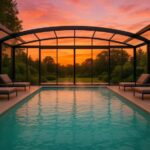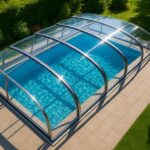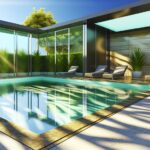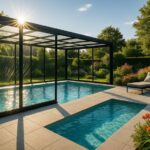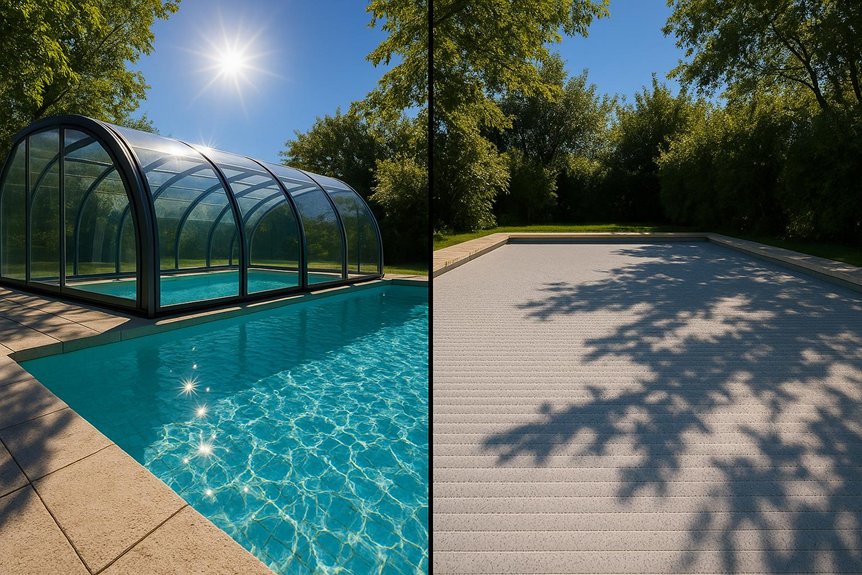
When choosing between pool enclosures and covers, consider your needs. Enclosures offer year-round protection and aesthetic appeal but require a higher upfront cost. They enhance safety for kids and pets while markedly reducing energy bills. Covers are budget-friendly and easy to install but need regular maintenance and replacement every few years. If you swim frequently, an enclosure might be worth the investment, while a cover could suffice for occasional use. Explore the details to find out what fits you best.
Understanding Pool Enclosures
A pool enclosure offers you protection from insects, debris, and harsh weather, making it easier to enjoy your pool year-round.
You can choose from various types, like screened or glass enclosures, each with its own benefits.
With proper care, these structures can last for decades, providing a solid return on your investment.
What a Pool Enclosure Does
Pool enclosures offer multiple benefits that enhance your swimming experience. They provide extensive protection against insects, debris, and various weather elements, allowing you to enjoy year-round swimming, no matter the season.
By trapping heat and reducing evaporation, these enclosures create a comfortable aquatic environment. Additionally, pool enclosures enhance the aesthetic appeal of your outdoor space with customizable designs that can complement your home’s architecture.
While installing a pool enclosure often requires professional help due to its complexity, it typically demands less day-to-day maintenance than traditional pool covers.
Although the initial investment can be significant, pool enclosures provide long-term savings through reduced maintenance costs and can even increase your property’s value, making them a worthwhile consideration for protecting your pool.
Types of Enclosures Available
When it comes to choosing the right enclosure for your pool, understanding the various types available can make a significant difference in your overall experience.
Screened enclosures are an affordable option that keeps out insects and debris while allowing airflow, creating a comfortable environment.
If you’re looking for durability and a modern aesthetic, glass enclosures might be the way to go, as they can last indefinitely.
For flexibility, consider retractable enclosures, which let you switch between open-air and fully covered spaces.
Polycarbonate enclosures offer high impact resistance and UV protection, ensuring they withstand harsh weather.
Plus, customization options allow you to tailor the enclosures to fit your pool’s unique shape and style, enhancing both functionality and visual appeal.
Average Lifespan of an Enclosure
While evaluating your options for pool enclosures, it’s crucial to understand their average lifespans, as this can greatly impact your investment.
Aluminum enclosures typically last between 15 to 20 years, offering excellent rust and corrosion resistance. If you opt for steel, expect a lifespan of 15 to 25 years with proper maintenance.
Glass enclosures can last indefinitely with care, while their supporting structures usually endure 20 to 30 years.
Polycarbonate options provide 10 to 20 years of protection, boasting high impact resistance.
Keep in mind that screen materials generally last around 7 to 10 years, although the framing can last longer with the right upkeep.
Choosing the right enclosure can enhance both the longevity and enjoyment of your pool.
Understanding Pool Covers
When it comes to pool covers, you’ll find they serve multiple purposes, from keeping debris out to enhancing safety.
There are various types available, such as automatic, manual, solar, and thermal, each with unique benefits.
Understanding the average lifespan of a pool cover can also help you plan for future maintenance and replacement costs.
What a Pool Cover Does
A pool cover plays an essential role in maintaining your pool’s cleanliness and safety. By providing protection from debris like leaves and insects, pool covers noticeably reduce your cleaning costs and maintenance efforts.
They’re made from various materials such as PVC, coated tarpaulin, or vinyl, and come in different designs and colors to suit your aesthetic preferences. Additionally, pool covers effectively reduce water evaporation, conserving the chemicals and energy needed for heating, which can save you money in the long run.
While they typically need replacement every 5-7 years, their budget-friendly nature makes them a practical choice for many pool owners. Overall, pool covers are a smart investment for keeping your pool safe and clean.
Different Types of Pool Covers
Choosing the right type of pool cover can greatly enhance your pool’s safety and maintenance efficiency. There are several options available to suit your needs.
Automatic pool covers offer the ultimate convenience with one-button operation, providing excellent protection against debris and unauthorized access.
If you’re looking for something more budget-friendly, manual pool covers require a bit more effort but are still effective.
Solar pool covers not only keep debris out but also help retain heat, lowering your heating costs.
For families with children or pets, safety pool covers are vital as they create a strong barrier to prevent accidental drownings.
Each type of pool cover has its unique benefits, making it essential to choose one that fits your lifestyle.
Average Lifespan of a Pool Cover
Understanding the average lifespan of a pool cover is essential for maintaining your investment and ensuring safety.
Standard manual pool covers generally last around 5-7 years, influenced by usage and environmental factors. If you opt for an automatic pool cover, you can expect a lifespan of 10-15 years with proper maintenance, thanks to its sturdy construction.
Solar pool covers, however, are thinner and typically last about 3-5 years due to UV exposure. For those prioritizing safety, safety pool covers can last between 8-10 years, offering reliable protection against debris and unauthorized access.
Comparing Cost and Installation
When you’re weighing pool enclosures against pool covers, the initial investment can vary greatly.
Pool covers are generally easier and cheaper to install, while enclosures require more upfront cost and professional help.
However, considering their long-term value, enclosures might save you money on maintenance and increase your property value over time.
Initial Investment Differences
Investing in a pool enclosure or cover means weighing costs and installation efforts carefully.
Pool enclosures typically require a larger initial investment, ranging from $5,000 to $50,000, due to their complex installation and customization options.
In contrast, traditional pool covers are much more budget-friendly, with prices starting around $100.
However, keep in mind that covers may need replacement every 5-7 years, which can increase long-term expenses.
While enclosures offer long-term benefits like increased property value and reduced maintenance costs, traditional covers focus on immediate affordability.
Ultimately, you should consider these initial investment differences alongside your swimming frequency and desired safety features to make the best choice for your outdoor space.
Ease of Installation
If you’re considering a pool enclosure versus a pool cover, the ease of installation can greatly impact your decision.
Pool covers are generally much simpler to install, often allowing you to tackle the job yourself, which can save you money. In contrast, pool enclosures usually require professional installation due to their complexity, leading to higher upfront costs that can range from $5,000 to $50,000.
While covers are easier to install, they may need replacement every 5-7 years, adding to your long-term costs. Once set up, pool enclosures typically require less daily maintenance, enhancing their ease of use.
Ultimately, your choice should reflect how much effort and money you’re willing to invest in installation and ongoing upkeep.
Long-Term Value Considerations
Choosing between pool enclosures and covers involves careful consideration of long-term value, especially regarding cost and installation.
While traditional pool covers are budget-friendly initially, they may require replacement every 5-7 years, leading to higher long-term costs.
In contrast, pool enclosures typically come with a larger upfront investment, ranging from $5,000 to $50,000, but they can enhance your property value and provide long-term benefits by reducing heating and maintenance expenses.
Installation of enclosures is complex and often requires professionals, while covers are easier to install yourself.
Ultimately, weigh the initial costs against the long-term benefits to decide which option aligns best with your needs, safety preferences, and overall enjoyment of your pool.
Maintenance Requirements
When it comes to maintenance, pool enclosures and pool covers have different needs.
You’ll find that enclosures generally require less day-to-day upkeep, while covers demand more frequent attention to keep them clean and functional.
Consider how much time and effort you’re willing to invest in maintaining your choice before making a decision.
Maintaining a Pool Enclosure
Maintaining a pool enclosure is essential for guaranteeing its longevity and effectiveness in keeping your pool clean and safe. Unlike traditional covers, pool enclosures require less daily maintenance since they naturally keep debris out of the water.
However, regular inspections of the structural components, like frames and screens, are vital to identify any wear or damage early on. Depending on the material, screens might need replacement every 7-10 years, while glass and polycarbonate enclosures can last much longer with proper care.
Clean the surfaces periodically with non-abrasive solutions to keep them looking great and clear. If you have retractable enclosures, lubricate the tracks and mechanisms to promote smooth operation and extend the system’s life.
Maintaining a Pool Cover
While pool enclosures require less daily upkeep, maintaining a pool cover demands consistent attention to keep it in good shape.
Regular maintenance is essential to prevent debris buildup, so be sure to remove leaves and dirt weekly during the swimming season. Most traditional pool covers will need replacement every 5-7 years due to wear and tear, adding to your long-term maintenance costs.
If you have a manual cover, check that it fits snugly, while automatic covers need periodic checks on the motor and mechanisms.
For solar covers, dry them completely before folding to avoid damage. Use a soft brush or cloth for cleaning; harsh materials can scratch and compromise the cover’s integrity.
Time and Effort Involved
Choosing between pool enclosures and covers involves weighing the time and effort each option demands for maintenance.
Traditional pool covers are simpler to install but require consistent upkeep, including cleaning and potential repairs every 5-7 years. This ongoing maintenance can add to your long-term costs and demands more of your time and effort.
In contrast, once a pool enclosure is installed—often with professional help—it typically requires less daily care. Screened enclosures can last about 7-10 years with proper maintenance, while glass or polycarbonate options may last even longer.
If you prefer convenience, consider automated pool covers, which encourage regular use.
Ultimately, enclosures may have a higher upfront cost, but their long-term benefits often outweigh the demands of traditional pool covers.
Safety and Protection
When it comes to safety and protection, you’ll want to weigh the benefits of pool enclosures against those of pool covers.
Enclosures create a strong barrier that helps prevent accidents, especially for families with kids and pets, while covers offer some safety features but can be less reliable.
Understanding how each option protects your pool can help you make the best choice for your needs.
Preventing Accidents with Enclosures
To guarantee the safety of your loved ones, pool enclosures provide an effective solution by creating a physical barrier that prevents unauthorized access.
This feature is essential for preventing accidents, especially in homes with children and pets. Designed to meet safety standards, these enclosures are durable and can withstand external pressures, ensuring long-term protection.
Unlike traditional pool covers that can be easily removed, enclosures offer a permanent solution that consistently safeguards your pool area. Many enclosures come equipped with locking mechanisms and secure designs, further preventing accidental falls.
Safety Features of Pool Covers
Pool enclosures provide robust safety features, but pool covers also play an essential role in protecting your swimming area. They act as a critical barrier, preventing accidental falls into the pool, which is fundamental for households with children and pets.
Safety pool covers are designed to support the weight of a child or pet, greatly reducing drowning risks when the pool isn’t in use. Many pool covers include locking mechanisms to prevent unauthorized access, enhancing your pool safety.
Plus, automatic pool covers can be easily operated with a button, providing convenience while ensuring your pool is securely covered when not in use. Regular maintenance and inspections of pool covers are essential to maintain their integrity and effectiveness.
Which Offers Better Overall Protection?
How can you guarantee the best protection for your swimming area? When weighing pool enclosures against pool covers, it’s clear that enclosures offer superior protection.
They create a secure barrier, preventing unauthorized access, which is essential for families with children and pets. Unlike traditional pool covers, enclosures effectively keep out debris, insects, and harsh weather, reducing maintenance and enhancing cleanliness.
Plus, many enclosures feature customizable designs that improve your outdoor aesthetics while providing year-round protection.
While covers may seem budget-friendly at first, they often require replacement every few years, which can lead to increased long-term costs and potential safety risks.
Ultimately, if you’re looking for thorough safety and protection, pool enclosures are the better choice.
Energy and Cost Savings
When it comes to energy and cost savings, both pool enclosures and covers have their advantages.
Enclosures can greatly reduce heating costs and minimize evaporation, leading to lower chemical usage over time.
If you’re looking for long-term savings and efficiency, it’s essential to weigh these benefits against your initial investment.
Reducing Heating Costs
While many homeowners seek efficient ways to reduce their heating costs, opting for a pool enclosure can be a game-changer.
Pool enclosures create a greenhouse effect that allows sunlight to warm your pool water naturally, greatly cutting heating expenses. By minimizing heat loss and evaporation, enclosures can lower energy consumption by up to 70%.
Unlike solar pool covers, which require manual handling, enclosures provide effortless temperature control. They also keep debris out, reducing the need for chemical treatments and further lowering maintenance costs.
Investing in a pool enclosure not only enhances your swimming experience but also leads to substantial long-term savings on energy bills. You’ll enjoy a comfortable pool year-round without breaking the bank.
Minimizing Evaporation
By choosing a pool enclosure, you can greatly minimize evaporation, which not only conserves water but also saves you money in the long run.
Pool enclosures create a controlled environment, allowing for up to 70% less water loss compared to uncovered pools. While traditional solar pool covers can help with reducing water evaporation, they typically only achieve a 30-50% reduction.
With an enclosure, you also benefit from lower heating costs since less energy is needed to maintain the water temperature. The greenhouse effect of an enclosure helps retain heat, further cutting down on energy expenses.
Lowering Chemical Usage
Reducing chemical usage in your pool can lead to significant energy and cost savings, and pool enclosures play an essential role in this process.
By creating a controlled environment, enclosures drastically cut evaporation, which means you’ll need fewer chemical additives to keep your water balanced. They also limit debris accumulation, reducing contaminants and further decreasing chemical usage for sanitation and maintenance.
While solar pool covers help retain heat and minimize evaporation, pool enclosures provide the added benefit of extending your swimming season with warm water temperatures that require fewer chemicals.
Which Option is Right for You?
When choosing between a pool enclosure and a cover, think about your climate and how often you use your pool.
Balancing your budget with your lifestyle needs is key to making the right decision.
Ultimately, consider what’ll serve you best in the long run while enhancing your outdoor space.
Considering Climate and Location
As you consider climate and location, it’s vital to evaluate how these factors influence your pool enclosure or cover choice.
If you live in an area with extreme weather, a pool enclosure offers year-round protection and allows for consistent swimming, unlike traditional covers that are limited to seasons.
In regions with high pollen or insect activity, enclosures provide a barrier against pests while allowing airflow, enhancing your comfort.
Additionally, if your climate experiences temperature fluctuations, enclosures help maintain water temperature and reduce heating costs.
For those in snowy areas, enclosures offer structural integrity, making them safer than covers that may require frequent replacements.
Ultimately, your climate plays a significant role in determining the best protection for your pool.
Balancing Budget and Lifestyle
Choosing the right option for your pool involves weighing both your budget and lifestyle preferences.
Pool covers are usually more budget-friendly, starting around $100, making them ideal if you swim occasionally. However, they require frequent replacements and mainly serve practical purposes.
On the other hand, pool enclosures demand a larger investment, typically starting at $5,000. They offer year-round use, enhanced safety for families, and can elevate your outdoor aesthetic, potentially increasing your property value.
If you swim often, an enclosure might be worth the investment for long-term convenience.
Ultimately, consider your swimming habits, maintenance costs, and how much you value aesthetics when deciding between pool covers and pool enclosures.
Making the Best Long-Term Choice
Determining which option is right for you hinges on your swimming habits and lifestyle preferences.
If you swim frequently throughout the year, investing in a pool enclosure might be your best long-term choice. Though they require a larger upfront investment, pool enclosures provide year-round swimming, enhanced safety, and can increase your property value.
On the other hand, if you use your pool sporadically during warmer months, traditional pool covers may suffice. They’re budget-friendly initially but can lead to higher long-term costs due to replacement needs.
Ultimately, consider how often you swim, your safety requirements, and the aesthetic appeal you want for your outdoor space when making your decision.
Choose wisely for lasting enjoyment!
Conclusion: Enclosure or Cover — What’s the Best Fit?
When it comes to deciding between a pool enclosure and a pool cover, understanding your unique needs can make all the difference.
If you’re looking for a budget-friendly option for seasonal use, pool covers might be the way to go, providing protection from debris and safety for kids and pets.
However, if you want year-round swimming and enhanced safety, pool enclosures offer superior protection against weather and insects, along with customizable aesthetics that can elevate your outdoor space.
Consider installation complexity and long-term costs, too.
Pool enclosures typically require professional help and come with higher upfront costs, but they can save you money on maintenance and heating over time.
Ultimately, your choice should reflect your swimming frequency, safety needs, and budget.
Take your time to weigh these factors; the right decision will enhance your enjoyment and peace of mind around your pool.
Frequently Asked Questions
Are Pool Enclosures Worth It?
Yes, pool enclosures are worth it if you value year-round swimming, reduced maintenance, and enhanced safety. They offer long-term benefits that outweigh the initial investment, making your pool experience more enjoyable and worry-free.
What Are the Benefits of a Pool Screen Enclosure?
A pool screen enclosure offers you protection from insects and debris, enhances safety, and allows for comfortable year-round swimming. Plus, its customizable design improves your outdoor space’s aesthetic while requiring minimal maintenance over time.
What Type of Pool Cover Is Best?
When choosing a pool cover, consider your needs. Automatic covers offer convenience and safety, while manual options are budget-friendly. Solar and thermal covers help with heat retention and water savings, enhancing your pool experience.
How Long Do Pool Enclosures Last?
Pool enclosures can last anywhere from 10 to 30 years, depending on the material. Aluminum and steel provide solid durability, while glass offers longevity with proper care. Consider your needs to make the best choice.
Conclusion
In the end, choosing between a pool enclosure and a pool cover boils down to your lifestyle and priorities. Do you want the freedom to swim year-round, free from bugs and bad weather, or are you more focused on safety and cost-effectiveness? Like a puzzle piece, each option fits differently in your backyard oasis. Take a moment to reflect on what brings you joy and comfort—your perfect swimming experience is just a decision away.