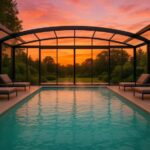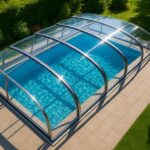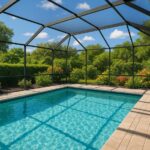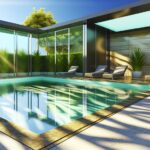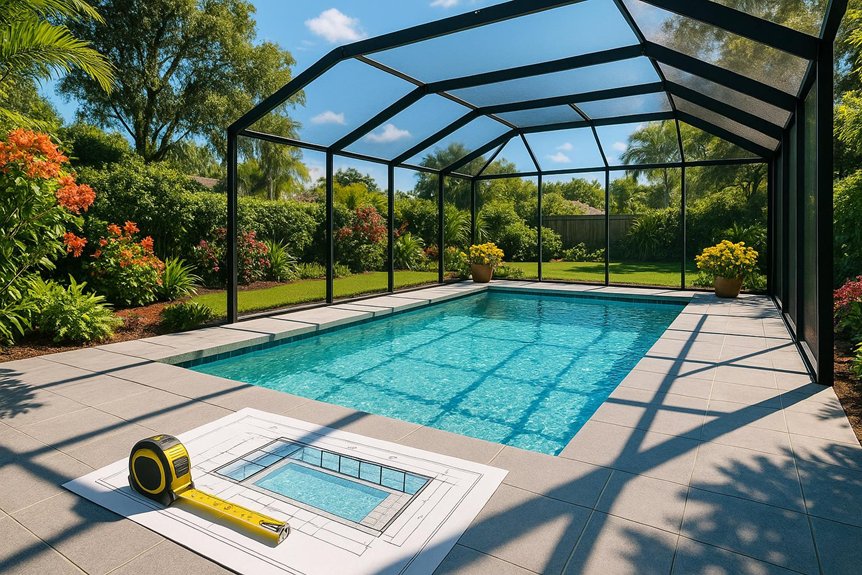
Choosing the right size pool enclosure starts with measuring your pool and ensuring there’s enough clearance around it for safety and maintenance. Think about your intended use — whether you plan to swim, lounge, or host gatherings, as this will influence height and dimensions. Don’t forget to factor in local climate and budget, as these play a role in overall costs and functionality. By considering these aspects, you’ll discover the ideal size for your backyard oasis.
Why Pool Enclosure Size Matters
The size of your pool enclosure plays an essential role in how you use and enjoy your outdoor space.
It can enhance the aesthetics of your yard while impacting maintenance and overall costs.
Impact on Functionality
When you choose a pool enclosure size, it greatly impacts how you and your family enjoy the space. The right size enhances functionality, allowing for activities like swimming, lounging, and playing games.
For instance, low line enclosures may limit your options, while high line structures provide ample room for furniture and gatherings. If you have a smaller yard, a middle line enclosure strikes a balance, offering relaxation space without overwhelming your outdoor area.
Additionally, a well-sized enclosure simplifies maintenance tasks, guaranteeing you can easily access pool equipment.
Ultimately, selecting the appropriate size not only maximizes your enjoyment but also assures you can fully utilize the area throughout the year, regardless of weather conditions.
Influence on Aesthetics
Choosing the right size for your pool enclosure not only enhances functionality but also considerably influences your backyard’s aesthetics.
The size of your pool enclosure plays a significant role in visual integration with your landscape. Low line enclosures maintain unobstructed views, allowing gardens and lawns to shine, while high line options can block those sightlines, disrupting the visual flow.
A middle line enclosure strikes a perfect balance, offering space for activities without overwhelming your yard. By selecting a size that complements the dimensions of your pool and yard, you can enhance the perceived spaciousness, making your outdoor area feel more inviting.
Properly sized enclosures enhance your home’s curb appeal and overall outdoor experience.
Effect on Cost and Maintenance
An appropriately sized pool enclosure not only enhances your outdoor experience but also greatly impacts your budget and maintenance routine.
Larger enclosures typically increase your installation cost due to more materials and labor. Additionally, maintenance costs can skyrocket as you’ll have more surface area to clean and maintain.
A compact enclosure can help lower energy costs since it may require less heating or cooling. Regular maintenance tasks, like cleaning and checking filters, also become more demanding with larger enclosures, often requiring extra tools for hard-to-reach areas.
Measuring Your Pool and Surrounding Space
To get started, you’ll need to measure your pool’s dimensions accurately, including its width, length, and depth.
Next, think about the space around it; you want enough room for decking and walkways while considering your landscaping and property lines.
This way, you’ll guarantee your enclosure fits perfectly and enhances your outdoor experience.
Accounting for Pool Dimensions
Accurate measurements of your pool and the surrounding space are essential for selecting the right enclosure size. Start by measuring your pool’s width, length, and depth to verify the enclosure fits the pool dimensions properly.
Consider how far the enclosure should extend beyond the pool edges; a few feet on each side is ideal for maintenance and movement. Think about the height of the enclosure based on your intended activities—higher options may enhance views while accommodating play.
Also, evaluate existing landscaping and structures to confirm the enclosure integrates well with your outdoor design. Finally, review property survey documents to ensure compliance with local regulations regarding property lines.
This thorough approach guarantees you choose the right size enclosure for your needs.
Allowing Space for Decking and Walkways
When planning your pool enclosure, it’s important to factor in space for decking and walkways, as these areas enhance both safety and accessibility.
Aim for at least 3 to 4 feet of clearance around your pool to guarantee you have enough room for movement and maintenance. This extra space allows for comfortable walking paths and safe access to your pool.
Remember, the enclosure should extend beyond the pool edges, accommodating coping stones or raised lips to prevent water spillage.
Also, consider any existing landscaping or structures that might limit available space.
Reviewing local zoning laws will help guarantee your pool enclosure complies with regulations while providing adequate space for important walkways and decking.
Considering Landscaping and Property Lines
While planning your pool enclosure, it’s crucial to carefully measure the area around your pool and account for existing landscaping and property lines.
Start by evaluating the total space designated for your pool installation, making certain you include any landscaping features that could affect the enclosure’s placement.
Utilize a property survey to determine your property lines and any setback requirements, which dictate how close the enclosure can be to your yard’s boundaries.
Consider the dimensions of the pool itself, as these will directly influence the enclosure’s size and shape.
Finally, make sure there’s enough room for comfortable decking or patio areas, allowing for safe movement and outdoor activities without overcrowding your backyard.
Deciding on Enclosure Height
When choosing the height of your pool enclosure, consider how it’ll affect your experience.
Low-profile enclosures offer great views but limit activities, while medium-height options strike a balance between space and visibility.
Full-height structures provide ample room for gatherings, but they can obstruct your garden’s aesthetics, so think about what works best for your needs.
Low-Profile Pool Enclosures
A low-profile pool enclosure can transform your backyard by providing unobstructed views of your garden and landscape.
Typically waist-high, these enclosures allow you to enjoy the sights while swimming or lounging. If you want a more open atmosphere, low-profile pool enclosures are perfect, as they won’t make you feel confined.
They come with lockable sliding panels for easy access, ensuring safety and security around the pool area. However, keep in mind that their height limits activities that require standing, making them best for swimming and relaxing.
When choosing a low-profile enclosure, consider how it will blend with your existing landscaping to maintain that unobstructed view and enhance your outdoor aesthetic.
Medium-Height Options
Choosing a medium-height pool enclosure strikes a perfect balance between functionality and aesthetics.
Medium-height enclosures, typically around the height of an average person, provide ample space around the pool for lounging and entertaining. You’ll enjoy comfortable seating in lawn chairs and engaging in water games without feeling confined.
These structures also allow for an open-air experience, as they can telescope to enhance usability. Additionally, selecting a medium-height enclosure helps maximize your yard space while ensuring enough height for relaxation and gatherings.
When making your choice, consider how the enclosure interacts with your existing landscape features to maintain beautiful garden views, further enhancing your outdoor oasis.
Full-Height or Walk-In Structures
How do you envision your pool experience? If you love entertaining, consider a full-height pool enclosure.
These structures provide ample room for furniture and activities, making them perfect for gatherings. With sliding panels, you can easily shift between indoor comfort and outdoor swimming. They also offer the added benefit of privacy screens, ensuring your relaxation isn’t interrupted by prying eyes.
Alternatively, if you prioritize unobstructed views of your garden, a low line enclosure might be ideal.
For a balance of space and visibility, a middle line enclosure provides enough height for lounging while maintaining an open feel. Ultimately, assess your lifestyle and how you’ll use the pool to choose the right enclosure height that fits your needs.
Factoring in Intended Use
When choosing a pool enclosure, think about how you plan to use the space.
If you’re aiming for simple protection, a compact design might work, but for hosting gatherings or adding furniture, you’ll need a larger, more accommodating setup.
Consider your needs and lifestyle to guarantee the enclosure enhances your outdoor experience year-round.
Simple Protection vs. Year-Round Living Space
Deciding between a simple protective enclosure and one that serves as a year-round living space can greatly impact your outdoor experience.
If your primary goal is to keep your pool clean and pest-free, a simple protection option might be all you need.
However, if you envision using the space for more than just swimming—like entertaining or relaxing—consider a high line enclosure. This design offers ample height for furniture and activities, transforming your pool area into a comfortable, year-round living space.
Think about how often you plan to use your pool and what activities you’ll enjoy. Balancing these factors will help you choose an enclosure that not only protects your pool but also enhances your overall lifestyle.
Hosting Gatherings and Entertaining
While planning for gatherings around your pool, it’s essential to choose an enclosure that enhances your entertaining experience.
A High Line enclosure offers ample space for furniture and comfortable movement, making it perfect for year-round gatherings. If you prefer a more compact option, consider the Middle Line enclosure, which provides enough height for water games and lounging without taking up too much yard space.
Look for sliding panels to easily shift between a covered and open-air swimming experience, adding flexibility for your events. Remember, the size of your pool enclosure should accommodate your guests, allowing for multiple activities like dining and swimming.
A well-designed outdoor living space will elevate the ambiance and enjoyment of your social events.
Adding Furniture and Outdoor Amenities
Choosing the right size pool enclosure means considering how you’ll use the space, particularly when it comes to adding outdoor furniture and amenities.
Think about the type of furniture you want—lounge chairs, tables, grills, or fire pits. A high line enclosure offers extra vertical space, letting you include larger pieces for gatherings.
If you prefer a more compact setup, a middle line enclosure balances usability and yard space, accommodating a few select amenities without feeling cramped.
Ascertain there’s enough clearance around the furniture for easy movement and maintenance tasks.
Ultimately, your enclosure should enhance your outdoor experience, allowing for relaxation and enjoyment without restrictions.
Considering Local Climate
When choosing a pool enclosure, local climate plays an essential role in your decision.
You’ll want to take into account factors like wind and weather resistance, snow load capabilities, and how well the enclosure protects against heat and sun exposure.
Tailoring your enclosure to your climate guarantees it will stand up to the elements while keeping your pool area comfortable year-round.
Wind and Weather Resistance
Understanding your local climate is vital for selecting a pool enclosure that can withstand wind and weather conditions.
If you live in an area prone to high winds, you’ll need an enclosure designed for wind resistance. Look for products rated by the manufacturer to guarantee they can handle local gusts effectively.
Additionally, prioritize enclosures made from durable materials, like reinforced aluminum, which offer better protection against severe weather.
Don’t forget to check local building codes, as they may specify the wind load requirements your enclosure must meet.
Regular maintenance, such as inspecting for loose panels or connections, is essential to keep your enclosure secure and functional over time.
Taking these steps will help ensure your pool area remains safe and enjoyable.
Snow Load Considerations
Before finalizing your pool enclosure, it’s essential to contemplate the snow load requirements specific to your region, as these can greatly affect its structural integrity during winter months.
In areas with heavy snowfall, you’ll need an enclosure designed to withstand significant weight, typically requiring a load capacity of 20-30 pounds per square foot.
Make sure to consult local building regulations to determine the specific snow load standards that apply to your area.
Additionally, choose materials that are durable and resistant to rust, such as aluminum, which offers strength without added weight.
Don’t forget to factor in the need for regular maintenance, like snow removal, to prevent damage from accumulated snow and ice on your pool enclosure.
Heat and Sun Protection
Choosing the right pool enclosure size not only enhances your outdoor space but also plays an essential role in heat and sun protection, especially in warmer climates like Florida.
A well-designed enclosure considerably reduces sunlight exposure, keeping your pool water cooler and more comfortable for swimming. It offers UV protection that blocks up to 99% of harmful rays, safeguarding your skin and reducing sunburn risks.
Additionally, the shade from an enclosure helps maintain a cooler outdoor environment, allowing you to enjoy your pool even during peak heat. By minimizing direct sunlight, enclosures also decrease evaporation rates, which can lower water consumption and maintenance costs.
Choosing the right size guarantees you get the most effective heat protection for your backyard oasis.
Balancing Budget and Size
When it comes to pool enclosures, size can greatly affect your budget.
Larger enclosures usually mean higher installation and maintenance costs, so you’ll need to weigh those expenses against your desired features.
Finding the best value for your investment is key, ensuring you get an enclosure that meets your needs without breaking the bank.
Cost Differences Between Small and Large Enclosures
While considering the cost differences between small and large pool enclosures, it’s essential to balance your budget with your needs.
Smaller enclosures, like low line options, typically come with lower installation costs due to fewer materials and simpler structures, making them a budget-friendly choice.
On the other hand, large enclosures, such as high line models, can greatly increase your project budget because of the extensive coverage and the need for robust support.
Even though flat covers might be cheaper than standing enclosures, larger sizes still require a more substantial investment in both materials and labor.
Ultimately, evaluating your budget constraints alongside your desired enclosure size will help you make a financially sound decision.
Maintenance Expenses Over Time
Opting for a larger pool enclosure can lead to increased maintenance expenses over time. The larger surface area means more cleaning and potential repairs, which can strain your budget.
Additionally, if your enclosure extends beyond the pool, you might face extra landscaping upkeep. The materials you choose also play a vital role; for instance, aluminum enclosures typically require less maintenance than wood structures.
Don’t forget about energy costs, which could rise if your larger enclosure includes heating or fans.
Finally, consider that larger enclosures might lead to higher insurance premiums due to increased risk. Balancing your budget and the size of your pool enclosure is essential to avoid unexpected financial burdens down the line.
Finding the Best Value for Your Investment
Finding the right balance between size and budget for your pool enclosure is crucial to maximizing your investment. Start by thoroughly evaluating your budget, as the type and size of enclosure will greatly impact costs.
While larger enclosures may accommodate more activities, they can also lead to higher installation and maintenance fees. Consider investing in high-quality materials like aluminum, which offer durability and rust-resistance, ultimately saving you money on repairs.
Research local market prices to align your budget with the best options available. Factor in professional contractor fees, as their expertise guarantees proper installation and compliance with regulations, enhancing the overall value of your investment while maintaining a focus on quality.
Professional Advice and Custom Design
When you’re ready to choose a pool enclosure, working with experienced installers can make a big difference.
They’ll help customize the design to fit your home’s layout while ensuring compliance with local building codes.
This way, you can create a space that’s both functional and stylish, tailored to your needs.
Working with Experienced Installers
As you commence on the journey to install a pool enclosure, partnering with experienced installers can make all the difference in achieving a design that perfectly fits your backyard and lifestyle.
These professionals help you assess your space effectively, ensuring the enclosure complements your pool’s dimensions while allowing for safe movement and activities. They’re knowledgeable about local regulations and can assist with obtaining necessary permits, keeping you compliant with safety standards.
Additionally, experienced installers can recommend durable materials, like rust-resistant aluminum, enhancing the enclosure’s longevity. Through personalized consultations, they’ll offer insights on design options that align with your home’s exterior, ensuring a cohesive look that adheres to any homeowners’ association guidelines you may need to follow.
Customizing for Your Home’s Layout
Working with experienced installers sets the stage for customizing a pool enclosure that fits perfectly with your home’s layout.
Start by accurately measuring your pool’s dimensions—width, length, and height—to guarantee a proper fit. Consult a professional contractor who specializes in pool enclosures to explore design options that enhance your home’s architectural style and curb appeal.
Consider your backyard’s landscape and existing structures to integrate the enclosure seamlessly, maintaining both accessibility and aesthetic value.
Custom designs can feature various roof types, impacting both appearance and weather resilience.
Collaborate with experts to assess your specific needs for space and functionality, creating a tailored enclosure that balances comfort and visual appeal for your outdoor space.
Ensuring Compliance with Building Codes
Before you plunge into installing a pool enclosure, it’s important to understand local building codes and zoning laws that dictate size, height, and setback requirements in your area.
Non-compliance can lead to fines or installation delays, so it’s smart to consult a licensed contractor who can guide you through necessary permits and regulations.
Many municipalities enforce safety standards for pool enclosures, including barrier height and gate locks to enhance security.
Additionally, familiarize yourself with your homeowners’ association guidelines to avoid conflicts over design elements like color and style.
A professional contractor can help customize your enclosure to meet both aesthetic preferences and legal requirements, ensuring a perfect fit for your backyard while keeping you compliant.
Conclusion: Choosing the Perfect Size for Your Pool Enclosure
Choosing the perfect size for your pool enclosure is essential not just for aesthetics but also for functionality.
Start by evaluating your available space and the dimensions of your pool to create a harmonious environment. Think about how you’ll use your pool—whether for relaxation, exercise, or entertaining—as this will guide your choice among low line, middle line, or high line enclosures.
Make sure the enclosure extends beyond the pool, allowing for maintenance and access to features. Height matters too; low line options provide unobstructed views, while high line structures offer more room for furniture.
Lastly, consult experienced contractors for tailored quotes and recommendations based on your backyard layout.
Frequently Asked Questions
What Size Pool Will Fit in My Backyard?
To find the right pool size for your backyard, measure your available space and consider local regulations. Think about how you’ll use it—relaxation, exercise, or entertaining—to guarantee it fits your lifestyle and needs.
How Do You Know if Your Backyard Is Big Enough for a Pool?
To know if your backyard’s big enough for a pool, measure your available space. Verify there’s adequate clearance for safety and maintenance, and consider existing features that might limit the usable area.
What Is the Average Size of a Pool Cage?
Ever wonder what size pool cage suits your needs? The average pool enclosure ranges from 12 by 24 feet for smaller pools to 20 by 40 feet for larger ones, ensuring ample space for activities and relaxation.
What Is the Best Pool Shape for a Backyard?
To find the best pool shape for your backyard, consider your available space and intended use. Rectangular pools suit lap swimming, while freeform shapes enhance aesthetics, and circular designs work well in smaller areas for intimate gatherings.
Conclusion
So, there you have it—choosing the right size pool enclosure isn’t rocket science, but you might think it is after measuring your yard for the fifth time. Remember, you’re not just building a barrier; you’re creating a fortress for your backyard kingdom! Make sure it’s the right height to keep out the neighbor’s nosy eyes and just the right size for your epic pool parties. Happy hunting, and may your enclosure dreams be as grand as your splashes!