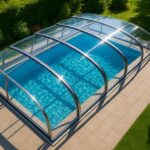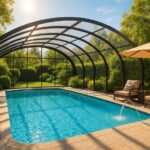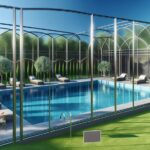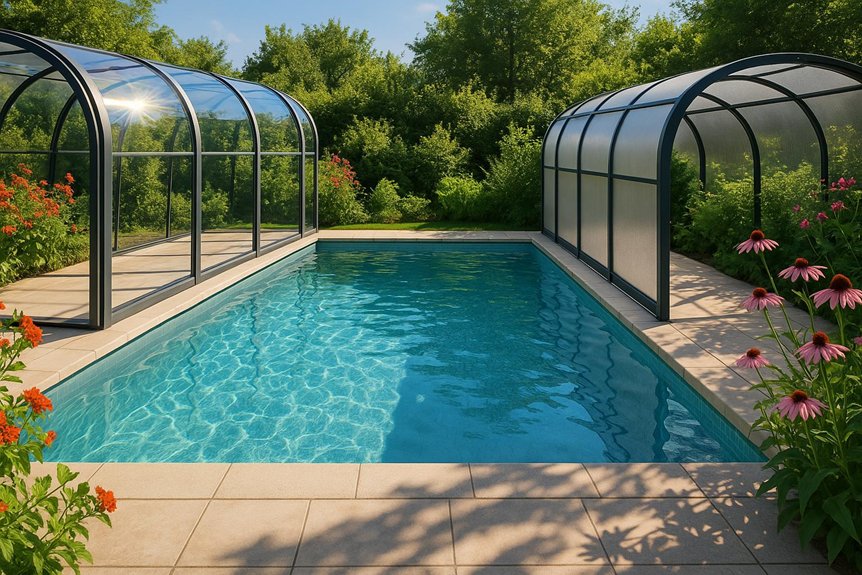
When choosing between glass and polycarbonate pool enclosures, think about your lifestyle and climate. Glass offers a sleek look and clear views, but it can be heavier and require more maintenance. On the other hand, polycarbonate is lightweight, highly durable, and provides better insulation, making it ideal for colder areas. Consider your design preferences and budget. There’s more to explore about these materials to help you make the best decision for your backyard oasis.
Understanding the Two Materials
When you’re exploring pool enclosures, understanding the differences between glass and polycarbonate is essential.
A glass pool enclosure offers a sleek look and excellent visibility, while a polycarbonate enclosure is known for its strength and insulation properties.
Each material has its own advantages, so let’s break down what makes them unique.
What is a Glass Pool Enclosure?
A glass pool enclosure, crafted from tempered or laminated glass, offers a sleek and modern aesthetic that enhances the beauty of your outdoor space.
With its unobstructed views, you’ll enjoy the surrounding landscape while basking in natural light. While glass provides excellent clarity, it generally offers limited insulation properties, which could lead to higher energy costs in colder climates.
To protect against UV radiation, glass enclosures often require additional coatings, unlike polycarbonate options that block nearly 100% of harmful rays.
Although glass can create a premium look, be aware that its heavier weight may necessitate extra structural support, ensuring your enclosure remains safe and durable for years to come.
What is a Polycarbonate Pool Enclosure?
Polycarbonate pool enclosures are a lightweight and highly durable option for protecting your swimming area. Made from a material that’s 200 times stronger than glass, these enclosures withstand extreme weather, ensuring safety and longevity.
Their multi-wall construction provides exceptional thermal insulation, retaining heat and helping lower energy costs, so you can enjoy comfortable swimming temperatures year-round.
Polycarbonate also blocks nearly 100% of harmful UV rays, protecting swimmers and reducing chemical decomposition in your pool water.
With self-cleaning properties and Easy Clean technology, maintenance is a breeze compared to glass.
Plus, polycarbonate offers various colors and finishes, giving you the design flexibility to enhance your pool area’s aesthetic appeal.
Benefits of Glass Pool Enclosures
When you choose a glass pool enclosure, you’re opting for a modern and elegant appearance that elevates your outdoor space.
You’ll enjoy unobstructed views of the surroundings while basking in natural light, making your pool area feel more open and inviting.
Plus, with its long lifespan and durability, this investment can enhance your home for years to come.
Modern and Elegant Appearance
Choosing a glass pool enclosure not only enhances your outdoor space but also brings a modern elegance that’s hard to match.
The sleek design and transparency of glass create an inviting atmosphere, allowing natural light to flood the area. This aesthetic appeal can elevate the overall look of your home, offering a refined touch that reflects your style.
Plus, glass enclosures are highly customizable to fit various architectural designs, ensuring they blend seamlessly with your existing decor.
With options like tempered or laminated glass, you get both beauty and safety, as they break into small, less harmful pieces if shattered.
Investing in a glass enclosure not only boosts your pool area’s elegance but can also increase your property value.
Unobstructed Views of the Outdoors
While you enjoy your pool, a glass enclosure offers stunning, unobstructed views of the outdoors that enhance your swimming experience.
The clarity of tempered or laminated glass guarantees that you won’t face any distortion, allowing you to take in the beauty of your surroundings.
Unlike polycarbonate, which can sometimes cloud your view, glass maintains an aesthetically pleasing appearance that complements any landscape.
Large glass panels maximize visibility, creating an open, airy feel that seamlessly connects your indoor and outdoor spaces.
This design not only floods your pool area with natural light but also elevates the overall ambiance, making your outdoor oasis even more enjoyable.
With glass, you truly get to savor those breathtaking views while you swim.
Long Lifespan and Durability
Given their exceptional durability, glass pool enclosures can be a wise investment for your home. They boast a long lifespan, often lasting indefinitely with proper maintenance, while the supporting structure typically endures 20-30 years.
Although glass is more fragile than polycarbonate, high-quality tempered or laminated glass can withstand environmental stressors, enhancing durability. Tempered glass shatters into small, less harmful pieces, adding an extra layer of safety.
Plus, their classic aesthetic appeal can increase your property value. Regular maintenance is essential, as neglect may shorten their lifespan.
When cared for, glass enclosures can provide decades of beauty and protection, making them a standout choice for those prioritizing both aesthetics and longevity in their outdoor spaces.
Drawbacks of Glass Pool Enclosures
While glass pool enclosures offer stunning aesthetics, they come with a higher installation cost due to their heavier structure requirements.
You’ll also find that maintaining their clarity demands frequent cleaning, which can be time-consuming and labor-intensive.
These factors could affect your overall enjoyment and budget when considering a glass enclosure for your pool.
Higher Cost of Installation
One notable drawback of glass pool enclosures is their higher installation cost. The material expense for glass is considerably greater than that of polycarbonate options, making it a less budget-friendly choice right from the start.
Additionally, installing glass enclosures often requires extra structural support, which can further inflate labor and overall installation costs. Tempered glass enhances safety but adds to the expense, making you think twice about your investment.
Long-term expenses also come into play, as regular maintenance and potential repairs for glass enclosures can lead to increased costs over time.
Ultimately, the combination of higher material costs, installation complexities, and ongoing maintenance makes glass enclosures a pricier investment compared to more economical polycarbonate alternatives.
Heavier Structure Requirements
Because glass pool enclosures are considerably heavier than their polycarbonate counterparts, they often require additional structural support to guarantee safety and stability.
This increased weight can lead to installation complications, extending project timelines and raising labor costs. You might find that reinforced framing and stronger foundations are necessary to accommodate the structural load demands of glass, adding to your overall expenses.
Moreover, the heaviness of glass can limit your design flexibility, making it challenging to create unique shapes or configurations for your enclosure.
In contrast, polycarbonate’s lightweight nature allows for easier handling and installation without the need for extensive support structures, ultimately offering a more versatile and budget-friendly option for your pool area.
Frequent Cleaning to Maintain Clarity
Maintaining the clarity of glass pool enclosures requires frequent cleaning, which can be a considerable drawback for many homeowners.
Glass enclosures tend to attract dirt, dust, and water spots, all of which diminish their transparency over time. The smooth surface easily accumulates algae and mineral deposits, meaning you’ll need to invest time and effort into regular maintenance.
Unlike polycarbonate, which boasts self-cleaning properties, glass enclosures often require additional cleaning solutions and tools, increasing your maintenance efforts.
Streaks and smudges can considerably affect visibility, making it necessary to clean them more often.
Benefits of Polycarbonate Pool Enclosures
When considering a pool enclosure, polycarbonate offers some impressive benefits that might suit your needs perfectly.
Its lightweight design makes installation a breeze, while its high impact resistance guarantees durability against harsh weather.
Plus, with excellent thermal insulation, you’ll find it keeps your pool warm and inviting with less energy cost.
Lightweight and Easy to Install
While you might be drawn to the sleek appearance of glass pool enclosures, polycarbonate options offer significant advantages regarding weight and installation ease.
Polycarbonate enclosures are over 50% lighter than glass, making them easy to handle and install without extensive structural support. This lightweight nature allows for greater design flexibility, enabling unique shapes that might be challenging with heavier glass.
Since polycarbonate enclosures are easier to install, they typically require less labor, which reduces overall installation costs and time. Plus, their lighter weight simplifies transportation and logistics, enhancing the efficiency of your enclosure project.
High Impact Resistance
Because polycarbonate pool enclosures are 200 times stronger than glass, they offer unmatched protection against impacts from harsh weather and stray objects.
Their high impact resistance makes them perfect for areas prone to hail, falling branches, or strong winds. Unlike glass, which can shatter, polycarbonate panels are virtually unbreakable and maintain their integrity over time, ensuring your pool area remains safe and secure.
Plus, these enclosures are up to 50% lighter than glass, making installation easier and requiring less structural support.
With a lifespan of 10-20 years, polycarbonate provides a durable option that minimizes maintenance costs.
Investing in polycarbonate means enjoying your pool without worrying about the weather or potential damage.
Excellent Thermal Insulation
Polycarbonate pool enclosures not only provide high impact resistance but also excel in thermal insulation.
These enclosures can insulate up to 60% better than glass, ensuring a comfortable swimming environment during colder months. The multi-wall structure of polycarbonate sheets greatly reduces heat loss through evaporation, promoting better heat retention.
As a result, you’ll enjoy warmer water temperatures and lower energy costs for heating your pool. This efficiency makes polycarbonate a cost-effective option, especially in climates with extreme temperature fluctuations.
While glass offers aesthetic appeal, you’ll find that the pros of polycarbonate, like enhanced thermal insulation and longer swimming seasons, outweigh the cons.
Choosing polycarbonate means you can swim comfortably even in cooler weather.
Drawbacks of Polycarbonate Pool Enclosures
While polycarbonate pool enclosures offer several advantages, they do come with some drawbacks.
You might notice that they can scratch more easily than glass, which could affect their clarity over time.
Additionally, if you’re looking for a more luxurious aesthetic, polycarbonate may not meet your expectations since it often lacks the elegance of glass.
Potential for UV Yellowing Over Time
Although polycarbonate pool enclosures are a popular choice due to their durability and affordability, they do come with a significant drawback: the potential for UV yellowing over time.
This discoloration can affect the clarity and overall aesthetic appeal of your enclosure, especially when exposed to direct sunlight. The degree of yellowing often depends on the quality of the polycarbonate used; lower-grade options are more susceptible to this issue.
However, investing in higher-quality polycarbonate that includes UV stabilizers can help mitigate the effects of UV yellowing.
While polycarbonate effectively blocks nearly 100% of UV rays, its protective properties can diminish over the years, making regular maintenance essential to maintain its appearance and functionality.
Less Luxurious Aesthetic
When considering a pool enclosure, you might find that polycarbonate options lack the luxurious aesthetic that many homeowners desire.
While they offer durability and impact resistance, polycarbonate enclosures don’t exude the same upscale charm as glass. The transparency of polycarbonate can be less clear, which affects the visual appeal and daylight transmission compared to glass’s pristine look.
Additionally, the color options for polycarbonate, like light blue or milky finishes, don’t provide the same level of elegance and customization that clear glass does.
If you’re aiming for a seamless blend with high-end architecture, glass enclosures usually stand out, offering that classic elegance and timelessness that polycarbonate simply can’t match.
May Scratch More Easily
Many homeowners appreciate polycarbonate pool enclosures for their affordability and impact resistance, but one notable drawback is their susceptibility to scratching.
While polycarbonate is durable, its softer surface can easily accumulate scratches from regular exposure to abrasive materials like dirt and debris. These scratches can diminish the overall clarity and aesthetic appeal of the enclosure over time, leading to a less attractive pool area.
Although self-cleaning properties can help with maintenance, you’ll still need to be proactive to preserve its appearance. Consider applying protective coatings or films to reduce scratches, but keep in mind that this may add extra costs to your installation.
Ultimately, careful maintenance is essential to keep your polycarbonate enclosure looking its best.
Cost Comparison: Glass vs. Polycarbonate
When it comes to cost, you’ll find that initial installation costs for glass enclosures are typically higher than for polycarbonate.
However, consider the long-term maintenance expenses; glass may require more repairs over time, which can add up.
Ultimately, evaluating the value for money between these two options will help you make the best choice for your pool enclosure.
Initial Installation Costs
Although both glass and polycarbonate pool enclosures serve the same purpose, their initial installation costs can greatly differ.
Polycarbonate enclosures typically have lower initial installation costs due to their lightweight nature, which simplifies transportation and reduces labor expenses. The cost of polycarbonate sheets is generally more budget-friendly than glass, making them an attractive option if you’re looking to save on upfront expenses.
While glass enclosures provide a classic aesthetic, their higher material costs and installation requirements often lead to greater overall expenses.
By choosing polycarbonate, you can enjoy significant long-term cost savings, including reduced energy bills thanks to better insulation properties.
Ultimately, considering these initial costs will help you make a more informed decision for your pool enclosure.
Long-Term Maintenance Expenses
While both glass and polycarbonate pool enclosures have their benefits, the long-term maintenance expenses can greatly impact your choice.
Polycarbonate enclosures generally offer lower costs in this regard, thanks to their impressive durability and resistance to damage. They can last 10-20 years without significant repairs, making them a budget-friendly option over time.
On the other hand, glass enclosures, while visually appealing, can rack up higher expenses due to potential repairs from breakage or weather damage. Additionally, maintaining glass often requires more cleaning products and treatments for UV protection.
In contrast, polycarbonate’s self-cleaning properties and Easy Clean technology simplify maintenance, further reducing your long-term costs and effort.
Value for Money
Considering the long-term maintenance expenses outlined earlier, the value for money becomes a key factor in choosing between glass and polycarbonate pool enclosures.
While glass offers a sophisticated look, its higher initial investment and need for additional UV protection can hike up your overall costs.
On the other hand, polycarbonate enclosures are generally more budget-friendly, providing excellent UV protection without extra treatments.
Their long-term durability and lower maintenance costs make them a more economical choice.
Plus, polycarbonate’s lightweight nature reduces transportation and installation expenses, offering further savings.
When evaluating value for money, polycarbonate clearly stands out as the more cost-effective option, ensuring you get the best performance and savings over time.
Choosing the Right Material for Your Pool
When choosing the right material for your pool enclosure, think about your climate, budget, and style preferences.
You want something that not only fits your financial plan but also matches your home’s aesthetic.
Taking these factors into account will help you make a decision that enhances your pool experience.
Considering Your Climate
Choosing the right material for your pool enclosure becomes essential depending on your climate.
If you live in a colder area, polycarbonate is your best bet; it retains heat up to 60% better than glass, allowing you to swim comfortably even in chilly weather. Its impact resistance, 200 times better than glass, makes it ideal for regions with severe weather, like hail or strong winds.
Additionally, polycarbonate blocks virtually 100% of harmful UV rays, protecting both swimmers and your pool’s water chemistry.
While glass offers a sleek look and a variety of design options, it may not provide adequate insulation, leading to higher heating costs.
Ultimately, consider your climate to choose the best material for your needs.
Balancing Budget and Style
While you want your pool enclosure to reflect your style, it’s essential to stay within your budget.
Polycarbonate enclosures often offer unique benefits, making them a cost-effective choice without sacrificing safety or aesthetics. They’re generally more budget-friendly than glass, providing long-term durability and lower maintenance costs.
Plus, polycarbonate sheets are 250 times stronger than glass, allowing for creative designs and easier installation.
While glass gives you a classic look and unobstructed views, polycarbonate helps reduce heat loss, keeping your pool warmer and potentially lowering energy bills.
When you’re looking to choose the best option, consider how each material aligns with your style, lifestyle, and financial priorities, ensuring you get the most out of your investment.
Matching Your Home’s Aesthetic
Selecting the right material for your pool enclosure can greatly enhance your home’s overall aesthetic, especially if you consider how each option complements your existing architecture.
Glass enclosures provide a sleek and modern appearance, creating unobstructed views and integrating seamlessly with landscaped surroundings.
However, if you’re looking for greater customization options, polycarbonate might be your best bet. Available in various colors and finishes, it allows for unique shapes and configurations that can better match your home’s aesthetic.
Plus, frosted polycarbonate options enhance privacy while still letting in natural light.
Ultimately, your choice should reflect your style preferences and align with your privacy policy, ensuring your outdoor space is both beautiful and functional.
Conclusion: Making the Best Choice for Your Backyard
When it comes to enhancing your backyard with a pool enclosure, you’ll want to weigh the benefits of both glass and polycarbonate carefully.
If you prioritize aesthetics and durability, glass might appeal to you. However, polycarbonate enclosures offer a range of advantages that could be better suited to your needs. They’re 250 times stronger than glass, allowing them to withstand various weather conditions with ease.
Plus, polycarbonate provides excellent UV protection, blocking nearly 100% of harmful rays, which is essential for your swimmers’ safety. Not only does polycarbonate retain heat better, reducing energy costs, but its lightweight nature simplifies installation, making it a more practical choice in the long-term.
Ultimately, consider your specific needs, lifestyle, and how each option aligns with your vision for your outdoor space. By doing so, you’ll make an informed decision that enhances your backyard beautifully and efficiently.
Frequently Asked Questions
Should I Use Glass or Polycarbonate?
When deciding whether to use glass or polycarbonate, think about your needs. If you want aesthetic appeal and durability, glass might suit you. However, for impact resistance and budget-friendliness, polycarbonate could be your better option.
What Is the Best Pool Screen Material?
When selecting screen solutions, consider sturdy screens like fiberglass for flexibility or aluminum for durability. Both balance beauty and barrier, ensuring your pool area’s protected from pests while maintaining a pleasant, pristine swimming space.
What Are the Disadvantages of Polycarbonate Glass?
Polycarbonate’s disadvantages include susceptibility to scratches, potential warping with temperature changes, and a shorter lifespan compared to glass. You might also notice it doesn’t provide the same optical clarity, affecting your overall visual experience.
What Is the R-Value of Polycarbonate Compared to Glass?
Polycarbonate typically has an R-value ranging from 1.5 to 3.0, considerably higher than glass’s approximate R-value of 0.9. You’ll find polycarbonate offers better insulation, helping to maintain pool temperatures more efficiently.
Conclusion
In the end, choosing between glass and polycarbonate pool enclosures depends on your preferences and priorities. If you crave elegance and clarity, glass may be your go-to. If you prioritize safety and budget, polycarbonate could be the perfect fit. Both materials offer unique advantages and drawbacks, so consider your lifestyle, maintenance needs, and the overall look you want for your backyard. By weighing these factors, you’ll find the enclosure that truly enhances your pool experience and suits your needs.